In the world of grant writing, there’s no one-size-fits-all approach. Every funder has unique priorities, guidelines, and expectations. The key to winning a grant is not just to have a great project idea but to present it in a way that resonates with the specific needs and values of the funder. This means tailoring your proposal to meet their requirements and, in essence, “meeting the funders where they are.” Let’s explore how you can adapt your proposal to increase your chances of success.
Why Tailoring Matters
Funders receive countless applications, so you want yours to stand out. One of the quickest ways to get your proposal dismissed is to ignore the specific requirements and preferences outlined in the grant guidelines. Think of it as a job application—if you don’t address the key skills and qualifications the employer is looking for, your resume might end up at the bottom of the pile. The same goes for grant proposals. Tailoring your proposal shows that you’ve done your research, understand the funder’s mission, and are committed to aligning your project with their goals.
Step 1: Do Your Homework
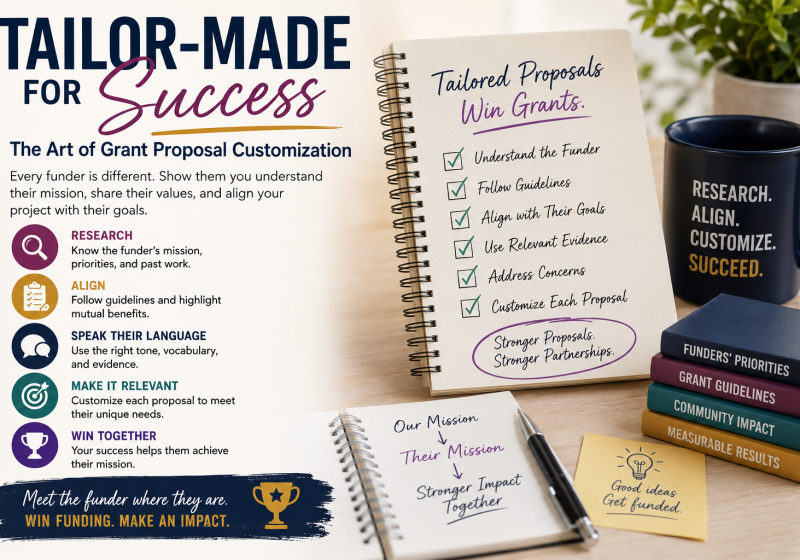
Before you even start writing, take time to research the funder thoroughly. Read their mission statement, review past grants they’ve awarded, and study their funding priorities. Many foundations and organizations publish reports or summaries of their recent projects, which can give you valuable insight into what they care about. By understanding their interests and focus areas, you can frame your proposal in a way that speaks directly to their objectives.
Step 2: Follow the Guidelines—Precisely
This may seem like a no-brainer, but it’s surprising how often applicants overlook basic guidelines. Funders provide specific instructions for a reason, and failing to follow them can signal carelessness or a lack of attention to detail. Make sure to follow all formatting rules, word limits, and structural requirements. If the guidelines ask for a two-page summary, don’t submit four pages. If there’s a specific question they want answered, make sure you address it directly. Think of the guidelines as a roadmap—they’re there to help you navigate what the funder wants to see.
Step 3: Speak Their Language
Different funders have different ways of communicating, and using the right language can make a big difference. For example, if a funder focuses on data-driven results, use precise, measurable language and emphasize the metrics you’ll use to track success. If the funder’s mission is centered around community engagement, highlight how your project will bring people together and create a positive social impact. Adapting your tone and vocabulary to align with the funder’s style shows that you’re in sync with their values and expectations.
Step 4: Highlight Mutual Benefits
Your project may be fantastic, but why should the funder care? Tailor your proposal to emphasize the benefits that align with the funder’s mission. For example, if you’re applying to an environmental organization, don’t just talk about the economic benefits of your project; focus on how it will protect natural resources, reduce waste, or promote sustainability. Show the funder that supporting your project will help them achieve their own goals, and make it clear how your success translates to their success.
Step 5: Use Relevant Evidence
Funders want to know that your project is not only feasible but also likely to succeed. Support your claims with relevant evidence that resonates with the funder’s interests. For example, if a foundation has a history of supporting educational programs, include data or case studies that demonstrate the success of similar initiatives. This will help build credibility and show that your project is backed by solid research and past achievements. Make sure to focus on evidence that aligns with the funder’s priorities—this is not the time to overwhelm them with unrelated statistics.
Step 6: Customize Each Proposal
Yes, it’s tempting to use the same proposal for multiple applications, especially when you’re trying to secure funding from various sources. But a generic, one-size-fits-all proposal is less likely to win over funders. Take the time to customize each proposal for the specific grant you’re applying for. This doesn’t mean rewriting everything from scratch; rather, tweak certain sections to better align with the funder’s interests. A few strategic adjustments can make your proposal feel more personalized and relevant.
Step 7: Address Potential Concerns
Funders may have concerns or questions about your project, and addressing these upfront can make your proposal more compelling. If you’re aware of any potential challenges—such as a new, untested approach or a tight timeline—acknowledge them in your proposal and explain how you plan to overcome them. This demonstrates foresight and preparedness, qualities that funders appreciate. It shows that you’re not just asking for money but are genuinely committed to seeing the project through to success.
Conclusion
Tailoring your proposal to meet the funder’s requirements is essential for standing out in a competitive field. By doing your research, following guidelines meticulously, and framing your project in a way that aligns with the funder’s mission, you increase your chances of success. Remember, funders want to see that you’re a reliable partner who understands and respects their goals. So, meet them where they are, speak their language, and present your project in a way that makes them excited to support you. It takes extra effort, but the reward is well worth it. Happy grant writing!
P. S. Get introduced to the latest AI technology to write better grants faster, The AI Grant Guide: 10 Steps to Easier and Faster. Value $99 Now $7.